The Importance of a Satisfying Ending
By: Ginger | Posted on August 9, 2024
As writers, we spend countless hours crafting the beginnings and middles of our stories, ensuring every plot twist and character development hooks our readers. But what about the ending? The final act of your story is more than just the conclusion—it’s the culmination of every narrative thread, every character arc, and every emotional beat you’ve woven throughout your work. It’s what your readers will remember long after they’ve closed the book. In today’s blog, Ginger demonstrates that while a well-crafted conclusion is a critical component of any successful story, getting it wrong can undermine the entire reading experience. Through a variety of examples, both successful and disappointing, he explains what goes into an ending that really resonates with readers. Understanding the importance of a satisfying conclusion can transform your storytelling, ensuring your readers are left with both a sense of fulfillment and a desire for more of your work. By… Read More >

Using Summer to Add Depth and Dimension to Your Story
By: Ginger | Posted on June 28, 2024
When woven into your narrative with finesse, a season like summer can become more than a mere backdrop—it can transform into a dynamic force within the story. Much like winter in Game of Thrones, where the relentless cold amplifies the harshness and isolation of the plot, summer, too, can infuse a story with its own distinct energy. Long hours of daylight, oppressive heat, and the unique sounds and smells of the year’s hottest season all become integral to the character’s journey, bringing your setting to life and adding richness to your story. In this week’s blog, Ginger explores how the essence of summer can create a vivid and immersive environment that adds yet another dimension to your story. Through a variety of examples, he demonstrates how by tapping into the sensory richness of the season, you can evoke powerful emotions, mirror character development, and enhance thematic depth. Ultimately, summer can… Read More >

Using Fiction as a Protest Against Injustice
By: Ginger | Posted on June 21, 2024
In the midst of a world that continues to feel unsettled and divided, the power of storytelling shines as a beacon of hope and change. Authors have a long history of addressing real-life problems through fiction, weaving tales that not only entertain but also provoke thought and inspire action. In today’s blog, Ginger explores the profound impact that literature has historically had in challenging the status quo and the vital role that we, as writers, play in shaping societal perspectives. Literature has always been a powerful form of protest, especially during times of outrage or when the desire for change burns brightly. By reflecting the world’s injustices and offering a glimmer of hope, these stories resonate deeply with readers, regardless of whether the author is traditionally or self-published. What truly matters is that we harness the power of our words to address the complexities of our times, create works that… Read More >

Balancing Action and Character Development
By: Ginger | Posted on June 7, 2024
Balancing action with character development is an art form that can make or break a novel. Too much focus on action can lead to flat and underdeveloped characters, making it difficult for your audience to connect with the story. To truly elevate your storytelling, it’s essential to balance thrilling sequences with effective characterization techniques. In today’s blog, Ginger delves into various strategies for achieving this balance by examining a variety of popular movie and literature examples. From understanding the power of pacing to using action scenes to reveal character traits, his advice can help you harmonize high-octane adventures with introspective emotional journeys, ensuring your stories resonate more powerfully with readers. Recently, I went to see Guy Ritchie’s The Ministry of Ungentlemanly Warfare. It was a terrific, fast-paced movie that delivered on the action and didn’t take itself too seriously – but as I was watching it, I also appreciated all… Read More >
How to craft prequels the Star Wars way
By: Ginger | Posted on May 31, 2024
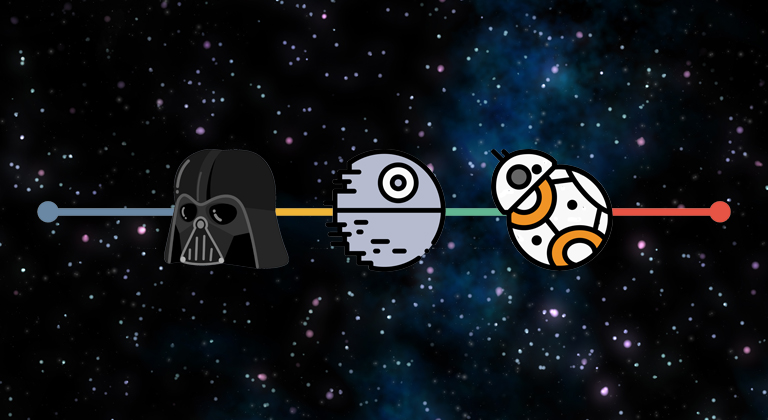
The Star Wars prequels have long been a topic of debate among fans and critics alike, but it’s hard to argue against their success in expanding the beloved fictional universe into something even bigger and grander in scale. There are many reasons for creating a prequel, from adding depth to an existing story to offering fresh perspectives that create stronger connections with well-known characters. Numerous prequels have enriched their original series, and when done well, they are usually appreciated by fans eager to return to a world filled with familiar characters and settings. For authors, prequels provide the opportunity to build rich new backstories for their characters and enhance their fictional worlds, as long as they maintain continuity with the original works. In today’s blog, Ginger uses the Star Wars universe, and many other examples from film and literature, to illustrate how you, too, can use prequels to captivate your audience… Read More >

Using Science Fiction Writing to Reflect Reality
By: Ginger | Posted on May 17, 2024
Science fiction, a genre where futuristic worlds and advanced technologies serve as the setting for exploring profound societal issues, has always been more than mere escapism. For as long as the genre has existed, it’s been used to mirror both our deepest anxieties and our highest aspirations. By using fantastical backdrops to delve into pressing issues, authors not only captivate readers but also subtly encourage reflection on real-world challenges. By providing examples of how legendary sci-fi writers have used their stories as platforms for commentary and change, Ginger illustrates how we, too, can use our science fiction writing to not just entertain, but also challenge, inspire, and perhaps even influence how our future unfolds. I love all types of books and stories, but science fiction has always had a special place in my heart. Growing up, I used to devour my father’s huge collection of science fiction paperbacks and short… Read More >

Using Alternating First-Person POV in your Novel
By: Ginger | Posted on May 3, 2024
There are many ways to tell a story, and authors tend to write in the style that they find most comfortable. Yet there are sometimes reasons to select one style over another, aside from personal preference. For example, an alternating first-person point of view, with chapters switching between the perspectives of the main characters, can enrich storytelling in a variety of genres by offering a more intimate connection to the characters’ inner thoughts and feelings. Ginger discovered success with this POV style years ago, and has been using it in most of his novels ever since. Through his years of experience, he has gathered an understanding of the mechanics, benefits and nuances that go into it, and he’s sharing that knowledge with us today. So if you’re unfamiliar with this technique but looking to give it a try, or even if you have some experience with it of your own, read… Read More >

The Author’s AI Toolkit – Prompting 101
By: Craig | Posted on April 26, 2024
Last month, I kicked off this new AI author toolkit series with a brief overview of artificial intelligence (AI) and its importance for writers, including some available options and a preview of key topics we’ll explore in future installments. To truly benefit from this series, however, it’s essential that you understand the basics of how to interact with AI. That is, via Prompts. By now, most people are at least familiar with the terms “AI Prompts” or “Prompting” or “Prompt Engineering”, but may not be clear about what they really mean or why they are so important to AI. Even among those that do understand what prompts are, some believe the whole concept to be overly complicated, scary, or too technical. After all, there are already a myriad of courses and degrees in Prompt Engineering, so they must be hard to use, right? Wrong. The Truth About Prompting First of… Read More >

Can You Use AI To Become a “Plotter”?
By: Ginger | Posted on March 22, 2024
Some authors like to plot out their novels before they start writing, and others like to fly by the seat of their pants, letting the characters direct the story as they go. However, it’s not always so black and white, with some author’s taking a more hybrid approach, and others switching from plotter to pantser depending on the project. Yet for authors who aren’t opposed to using AI for a bit of assistance in their planning process, it’s never been easier to be a plotter. As Ginger lays out in today’s blog (with some great examples), AI can not only help guide you through the plotting process of whatever genre or style of book you are writing, but it can even do so using the story structure you want your book to follow. So whether you’re using ChatGPT, Claude, Gemini, or something else, plotting has never been easier! Traditionally, there… Read More >

The Author’s AI Toolkit – An Ongoing Series
By: Craig | Posted on March 8, 2024
After exploding into public awareness about a year ago, generative AI seems to be all anyone is talking about these days. First it was simply a really cool “chatbot” idea that seemed like a fun distraction and a way to get some quick answers versus having to do a traditional web search. Quickly, though, it became a looming threat hanging over virtually every industry, just waiting to take our jobs. But for authors, there is more of an opportunity to make our jobs easier than there is a chance we’ll lose them completely. AI can be used as a tool in a variety of ways to do just that, and for this reason, I’m launching a series of articles on this very topic starting with this first of the series. It’s no secret that I’ve been enthusiastic about Artificial Intelligence (AI) since I first discovered ChatGPT about a year ago…. Read More >