
The Writer’s Role in a Divided Age

By: Ginger on January 30, 2026




The problem with waiting for events to calm down before writing about them is that history never announces when it is safe to document it. Political tension, social division, and a constant sense of uncertainty have become the background noise of daily life, and whether you see this moment as dangerous, overblown, or somewhere in between, it is undeniably shaping how people think, fear, argue, and survive. But rather than allowing these forces to become distractions from your writing, authors should be using this very material as their source of inspiration.
Drawing on historical examples from writers who lived through fascism, war, and occupation, Ginger makes the case that modern authors have a responsibility that goes beyond entertainment or commentary. No one expects you to be neutral, prophetic, or even certain. You simply need to be honest, specific, and present. From memoir and nonfiction to contemporary fiction, your voice matters. As history has shown us time and again, ordinary details become invaluable records, and waiting for clarity will keep you on the sidelines forever. So if you have been feeling the urge to document these times, stop hesitating and start writing. The future depends on your account.
My favorite meme recently was a picture of Oliver from Oliver Twist, holding out his empty bowl, begging: “Please, sir—can I have some precedented times?”
I feel you, little guy! Whatever your personal politics, there’s no denying that we’ve been living through these so-called “unprecedented times” for far longer than most of us feel comfortable with!
First it was COVID, then it was everything else that followed. Right now, as the very foundations of American democracy seem to be crumbling, it feels like once again we’re experiencing “another extraordinary moment in history.”
The political temperature has reached a fever pitch, with tensions running higher than many of us have ever experienced in our lifetimes. Social media is overflowing with fear and anger. Families are arguing over holiday dinners and entire communities are being fractured along ideological lines. The democratic institutions that we’ve relied upon to ensure democracy for two and half centuries now face questions and challenges that would have seemed unthinkable just a decade ago.
Many Americans don’t yet believe we’re living under fascism. They might even find such comparisons hyperbolic or offensive. However, a substantial and growing number of people do believe this, and as a history major, I can point to a concerning number of patterns to support their belief.
Whether it’s the vilification of the press and media, the constant attacks on democratic processes and election integrity, the scapegoating of minority groups, the erosion of institutional norms, the cult of personality around political leaders, or the increasingly authoritarian rhetoric from various corners of power—it’s all stuff we’ve seen and read about before.
So whether you agree with the belief that we live under fascism, or vehemently oppose it, the fact remains that we’re living in a time of profound political uncertainty and social upheaval.
And that’s precisely why you, as a writer, need to write about it.
The Imperative to Bear Witness
History isn’t just made by politicians and generals. It’s lived by ordinary people like you and me, and our neighbors and family.
The grand narratives that fill history books often miss the texture of daily life: what it felt like to wake up each morning during a crisis, how people adapted their routines accordingly (have any of us ever recovered from having to wear masks and socially distance?) and the conversations that happened around kitchen tables as a result of this uncertainty. We know what happened, and who were the historical figures behind each crisis. What history books often don’t tell us is which fears kept people awake at night during those times, and how communities responded to the pressure and change.
This is where writers come in.
Whether through a memoir, a work of non-fiction, or contemporary fiction, writers have always had the power to capture the experience of crucial points of history in ways that future generations have found invaluable. The political battles they lived through were eventually settled, one way or another, but the lived experience of those times—the emotional truth of them—would have been lost if it hadn’t been written down.
Consider how grateful we are now for the writers who documented the tumultuous times they lived in. For example, we don’t just read about World War II in textbooks, we understand it through the novels, films, and even comic books written by and inspired by the writing of those who actually lived it.
These personal accounts, written as events unfolded, have become invaluable historical records precisely because they captured the uncertainty, fear, hope, and resilience of people who didn’t yet know how the story would end.
It’s time to accept that future generations need you to rise to the same challenge, and record these “unprecedented times” no matter how reluctant we are to live in them. If you believe we live under modern fascism, now is the time to write about that. If you believe these claims are spurious, now is your opportunity to set the record straight.
The history our great grandchildren will learn at school will be determined by people like you. Don’t let them down.
Lessons from History’s Witnesses
Many people claim that the proof we live under a fascist government is to be found in the books written during the era of the most famous fascist regime, Nazi Germany of the 1930s and 1940s.
I studied this period at university, and here were some of the books we were required to read to truly understand what they period was like:
The Diary of Anne Frank remains the most famous example of contemporary witness testimony from occupied Europe. Anne Frank’s diary wasn’t written as a historical document, it was the private thoughts of a teenage girl hiding from Nazi persecution. Anne wrote about her fears and frustrations, her crushes and quarrels, her boredom and her hopes. It’s no different to the diary you might have kept when you were a teenager! Yet it has gone on to become one of our most powerful windows into the Holocaust precisely because of its intimacy and immediacy. She gave us the human dimension of historical horror.
Victor Klemperer’s diaries, published as I Will Bear Witness, offer another crucial perspective. Klemperer was a Jewish professor in Dresden who kept meticulous diaries throughout the Nazi era. His day-by-day account of how gradually, then suddenly, society transformed around him provides chilling insight into how authoritarianism takes root. He documented the small indignities and escalating dangers with scholarly precision, creating an irreplaceable record of how ordinary life persisted even as extraordinary evil unfolded. It’s in his book that I find the most comparisons between the rise of Nazi Germany and the authoritarian regime we live under today.
Etty Hillesum, a young Dutch Jewish woman, kept a diary from 1941 until her deportation to Auschwitz in 1943. Her writings, later published as An Interrupted Life, explore her inner spiritual life alongside observations of the occupation. It’s a book very much about her faith and religion, written during a time in which she was actively persecuted for those things. Hillesum’s work demonstrates how personal reflection can add fascinating context that contemporary documentation might otherwise ignore, offering both philosophical depth and historical witness that allows us to understand what it was like to live during those times.
The Amsterdam diaries of Dr. Jacob Presser provided another Dutch perspective. Presser, a historian who survived the war, documented the occupation and the persecution of Dutch Jews with both personal observation and scholarly analysis. His contemporary notes later informed his comprehensive historical work, showing how immediate documentation can serve future scholarship. Just like the police like to interview witnesses as soon after an event as they can, Presser’s work provides a window into history that hasn’t been smudged by bias, hearsay, and rumor.
Suite Française by Irène Némirovsky represents a different approach as contemporary fiction written during occupation. Némirovsky, a French novelist of Ukrainian Jewish origin, wrote this novel about the French exodus and occupation even as she was living through it. She died at Auschwitz before completing her novel, but the manuscript survived. In its published form, it’s both a literary masterpiece and an important historical document. Her fiction captured truths about human behavior under pressure that pure reportage might have missed. Her book demonstrates that even something as “frivolous” as fiction can provide an important window into a time long passed.
Through their work, these writers gave us more than facts and dates. They preserved the atmosphere, the psychology, the moral ambiguity, and the human complexity of living through crisis. Their work serves not just as history but as testimony to the resilience of the human spirit and the power of bearing witness.
Our generation is begging for authors to step up and shoulder a similar burden.
How to Write Your Contemporary Account
If you’re convinced of the importance of documenting this moment, how do you do it?
Here are some principles to guide you:
Be specific and concrete. Don’t just write that “tensions are high” or “things feel uncertain.” Describe the actual conversation you overheard at the grocery store, the specific Facebook post that made your aunt stop speaking to your uncle, the exact changes you’ve noticed in your community. Details ground your writing in reality and will resonate with future readers trying to understand this time.
Include your doubts and uncertainties. You don’t know how this story ends, and that’s okay. In fact, it’s essential. Future readers will value your honesty about not knowing what comes next. Write about your questions, your competing impulses, the times you changed your mind. This uncertainty is part of the historical record too. I remember reading about the choices my grandfather made in Britain in 1939, standing against appeasement to the approaching German army, and they say so much more about his character and values precisely because he didn’t know what would happen or if Britain would survive it.
Capture multiple perspectives. Even in a personal memoir, acknowledge that other people see things differently. Include the voices and viewpoints of those who disagree with you. This doesn’t mean giving equal weight to all positions, but it does mean honestly representing the complexity of the social landscape. The most valuable historical documents show us how divided communities navigated their divisions. I have some super MAGA friends on Facebook, for example, and you can’t write about how much you disagree with what’s happening in America without acknowledging that some people you know are just fine with it!
Don’t shy away from the mundane. Future historians will want to know how daily life continued (or didn’t) during this period. What did you eat? How did you work? What did you do for entertainment? How did you maintain relationships? The small stuff matters as much as the big political developments. Raymond Benson’s book The Mad, Mad Murders of Marigold Way will be an important read for future generations, for example, because it’s one of the few books written in 2020 that actually acknowledged the COVID crisis and how we had to wear masks and distance socially.
Write regularly and consistently. Whether you’re keeping a diary, writing essays, or crafting a novel that reflects contemporary concerns, make it a practice. The cumulative effect of sustained observation is far more valuable than sporadic commentary on major events. How you feel about things one day might shift dramatically overnight, and it’s valuable to record both those perspectives.
Be honest about your own position and biases. You’re a writer, not a journalist or historian. You have no obligation not to be biased. Having a perspective but trying to hide it will only make your work less useful. State your viewpoint clearly, then document why you feel that way and what you see to support your belief as faithfully as you can. Future readers can account for your biases as long as you’re upfront about them. They might even like you more because of them.
Your Voice Matters
If you’re feeling overwhelmed by the scope of current events, let this encourage you to start writing about it:
You’re not a historian.
You’re not expected to write the definitive account of our times. You just have to write your account. Your specific perspective, from your individual vantage point, documenting your unique slice of experience. That’s what’s valuable.
Because ultimately, history is composed of thousands of individual testimonies, each one adding brushstrokes to the larger picture. Your voice, your observations, and your story matter.
Whether you end up writing a memoir about how political divisions affected your family, a non-fiction examination of your community’s response to change, or a novel that channels contemporary anxiety into fiction, you’re doing important work.
The writers of World War II didn’t know their work would become crucial historical documents. They were simply compelled to write, to document, to bear witness. You’re feeling that same compulsion now, appropriate to your own extraordinary times.
Trust that instinct. Follow it. Write about it!
Believe it or not, but future generations truly are counting on you, even if they don’t know it yet. Write for them. Write for yourself. Write because someone needs to read it.
The political climate may be tense, the future may be uncertain, but your words will provide clarity, perspective, and truth that will outlast this moment of crisis.
Open your laptop (or pick up your pen) and start writing. History is happening right now, and you’re here to document it.
Share this blog


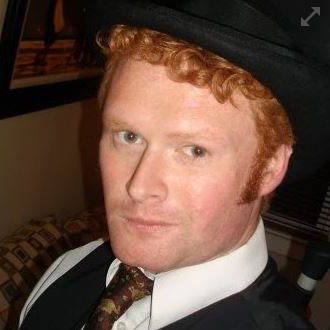
Ginger is also known as Roland Hulme - a digital Don Draper with a Hemingway complex. Under a penname, he's sold 65,000+ copies of his romance novels, and reached more than 320,000 readers through Kindle Unlimited - using his background in marketing, advertising, and social media to reach an ever-expanding audience.






Thank you. I’m from a place where it is both necessary (because of what is happening) and impossible (at risk of our lives) to write about what we are seeing.
This is insulting to a normal person’s intelligence. What country do you live in?
Hi Tara! I was born in the UK but for 15 years I’ve been a proud American citizen.
How is this insulting to a normal person’s intelligence?