The Most Personal Stories of Grief Feel Universal
By: Ginger | Posted on August 14, 2026
Grief is one of the most universal human experiences, which means countless stories have already been written about it. Yet for an author with their own experience of loss, that shouldn’t be a reason to avoid the subject. In fact, the details that make your grief uniquely yours may be exactly what allows your writing to connect so deeply with someone else. The most powerful stories about loss don’t try to capture grief in general, but instead explore it through one person, one relationship, and one absence. When written with honesty and specificity, readers can recognize something of themselves within that experience, even if the finer details don’t completely align. This week, Ginger explores that contradiction through his own recent loss and some of the books that helped him process his grief. Along with explaining why writing about your specific experience, rather than grief in the abstract, can be more… Read More >

Five Science Fiction Books That Shaped My Writing
By: Ginger | Posted on August 7, 2026
Every writer can point to a handful of books that permanently changed the way they think about storytelling. Sometimes it’s because of unforgettable characters or immersive world building. Other times it’s the ideas behind those stories that linger, especially when they continue to feel relevant decades later. Looking back at the novels that shaped your own writing can reveal as much about your creative voice as any writing course ever could. This week, Ginger revisits the five science fiction novels that had the greatest impact on his own journey as a writer. Through each one, he explores not only why the story has endured, but also the fascinating history behind its creation and the ideas that have stayed with him ever since. His reflections are a reminder that every author has their own collection of books that helped shape the stories they tell today, often in ways they only come… Read More >

The Power of Encouragement Every Writer Needs
By: Ginger | Posted on July 31, 2026
Writing advice often focuses on craft, productivity, and marketing, but some of the most important lessons have nothing to do with plotting a novel or selling more books. They come from the people who shape our confidence long before we ever reach readers. Whether it’s a parent, teacher, mentor, or fellow writer, the right words at the right time can make the difference between a story that gets written and one that never gets told. In this week’s blog, Ginger opens up on a personal level, reflecting on the loss of his father and the unexpected writing lesson it revealed. Through a moving family story, he explores the lasting impact of encouragement, the hidden cost of discouragement, and how a few simple words can shape a writer’s creative journey. It’s a powerful reminder that believing in a writer may be one of the most important gifts you can give. My… Read More >

The Secret Power of Nostalgia in Fiction
By: Ginger | Posted on July 24, 2026
Not all stories exist simply to entertain us. Some of the best do much more, transporting us back to moments we thought we’d left behind. Whether that’s the wonder of childhood, the excitement of discovering a favorite book for the first time, or the feeling of experiencing something unforgettable, evoking nostalgia is one of the most powerful emotional tools available to any writer, yet few authors consciously harness its full potential. This week, Ginger explores why nostalgia resonates so deeply with readers and, more importantly, how authors can weave that same emotional connection into their own fiction. By understanding what readers are really longing to revisit, you can create entirely new stories that don’t just entertain in the moment, but recapture familiar emotions, keeping readers hooked until the very last page. I’ve already written about The Backrooms, so now it’s time to talk about another summer blockbuster that teaches self-published… Read More >

How AI Is Changing Self-Publishing
By: Ginger | Posted on July 17, 2026
The rise of self-publishing platforms like KDP dramatically lowered the barriers to becoming an author, opening the door for countless writers to publish books that might never have found a home through traditional publishing. AI has lowered those barriers even further, but this time the industry has responded with far less enthusiasm. As low-quality AI-generated books continue to flood online marketplaces, Amazon has responded with new policies designed to slow the tide without closing the door on AI entirely. In this week’s blog, Ginger examines what these changes mean for legitimate authors and the future of self-publishing. Reducing publishing limits and requiring AI disclosure can only do so much, but will they really address the growing challenges around discoverability, reader trust, and author income? Regardless of where you stand on AI, these industry shifts are likely to affect your publishing career, making it more important than ever to understand the… Read More >

What Backrooms Teaches Authors About Storytelling
By: Ginger | Posted on July 10, 2026
Every writer has experienced a book, movie, or TV show that lingers in their mind long after it’s over, not because of a clever plot twist or unforgettable ending, but because of the way it made them feel. That kind of emotional atmosphere can be difficult to create, yet when it’s done well it becomes one of the most powerful storytelling tools an author has. The creepy concept of the “Backrooms” has bounced around the internet for the last few years, with a recent YouTube series gaining so much traction that the teenager behind it was offered the chance to turn it into a movie. The film became a surprise hit, thanks to its unsettling sense of mystery that captivated audiences, even those who had never heard of the concept before. This week, Ginger explores the reasons the movie has become such a success so that we might be able… Read More >
Designing a Collector’s Edition
By: Ginger | Posted on July 3, 2026
Last week, we explored why beautifully crafted print editions are becoming increasingly valuable for self-published authors, as more readers look for physical books that feel worthy of collecting rather than simply reading. But once you’ve decided to create a premium collector’s edition, a much bigger question remains. What actually separates an ordinary print edition from one that readers proudly display on their bookshelf for years to come? This week, Ginger examines an exceptional collector’s edition and uses it to uncover the thinking behind its design. Rather than focusing on flashy gimmicks, he explores how dozens of intentional decisions, from materials and typography to printing and presentation, combine to create something readers genuinely value. If last week’s article got you thinking about creating a special edition of your own, today’s blog offers a fascinating look at what it really takes to pull one off. Last week, I wrote an an article… Read More >
Turn Your Book Into a Trophy with a Special Edition
By: Ginger | Posted on June 26, 2026
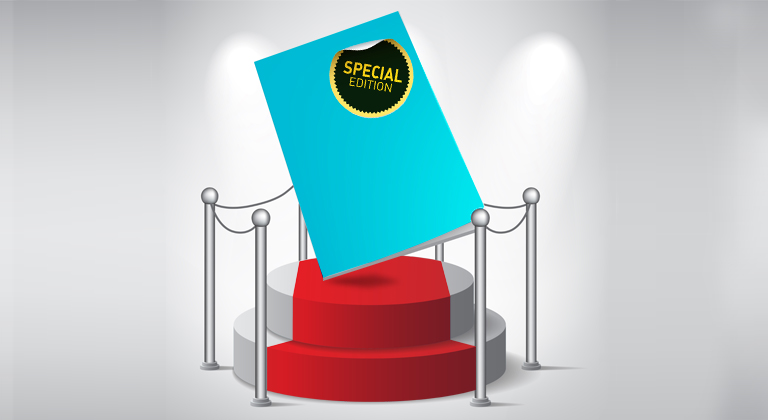
For many self-published authors, publishing a physical copy of their book is little more than an eBook afterthought. But a growing trend among readers who first discover books digitally is beginning to change that. Increasingly, readers are purchasing special edition paperback and hardcover copies of stories that had a meaningful emotional impact on them, not because they need another way to read the book, but because they want to own it. These keepsake editions often end up proudly displayed on bookshelves, serving as trophies that commemorate a memorable reading experience. This week, Ginger explores this shift in reader purchasing habits and the opportunity it creates for authors willing to think beyond standard print-on-demand options. From understanding the psychology behind collectible books to exploring the design and production choices that can transform a paperback into a premium product, he outlines a variety of ways authors can create physical editions that readers… Read More >

When Diversity Changes the Story
By: Ginger | Posted on June 19, 2026
One of the biggest challenges in modern storytelling is finding ways to make fictional worlds feel more reflective of the audiences reading and watching them today. Most readers agree that greater diversity in fiction is a good thing, but there is often far less agreement about how those changes should be implemented, particularly when adapting existing stories for a new generation. In this week’s blog, Ginger examines why some diversity decisions are embraced by audiences while others generate controversy, and what authors can learn from the difference. Using examples from film, television, books, and recent adaptation debates, he explores how character dynamics, worldbuilding, and narrative context can influence whether a creative choice feels thoughtful or forced. In the end, the choices writers make should always serve to make those characters and stories feel authentic, intentional, and true to the world they live in. Let me be upfront about something: I… Read More >

What Writers Can Learn from The Boys Finale
By: Ginger | Posted on June 12, 2026
The ending of a long-running series is often where storytelling ambitions collide with audience expectations. Readers and viewers want satisfying payoffs, beloved characters to receive meaningful conclusions, and years of investment to feel worthwhile. Achieving this with an original work is hard enough, but when adapting existing source material it becomes even more difficult, as was the case with Prime Video’s comic-book-turned-streaming-hit, The Boys. It was probably inevitable that the show’s finale would stir up controversy, but it also provides writers with a fascinating example of how theme, character arcs, and adaptation choices can shape the success or failure of an ending. In this week’s blog, Ginger examines what The Boys got right, where it stumbled, and why some of its biggest departures from the original comic may have ultimately strengthened the story. By going through what changes were made and why, it becomes clear that strictly following an original… Read More >